

In the dynamic world of startups, capital is the fuel for massive growth. However, those investing in an early phase (seed phase) face a classic dilemma: How much is the company worth today? A valuation that is too high scares off investors; one that is too low causes founders to lose massive shares before the journey has even truly begun.
This is where the Convertible Loan Agreement (CLA) comes into play. It acts as a pragmatic bridge builder between two worlds.
1. The Hybrid Nature: From Creditor to Shareholder
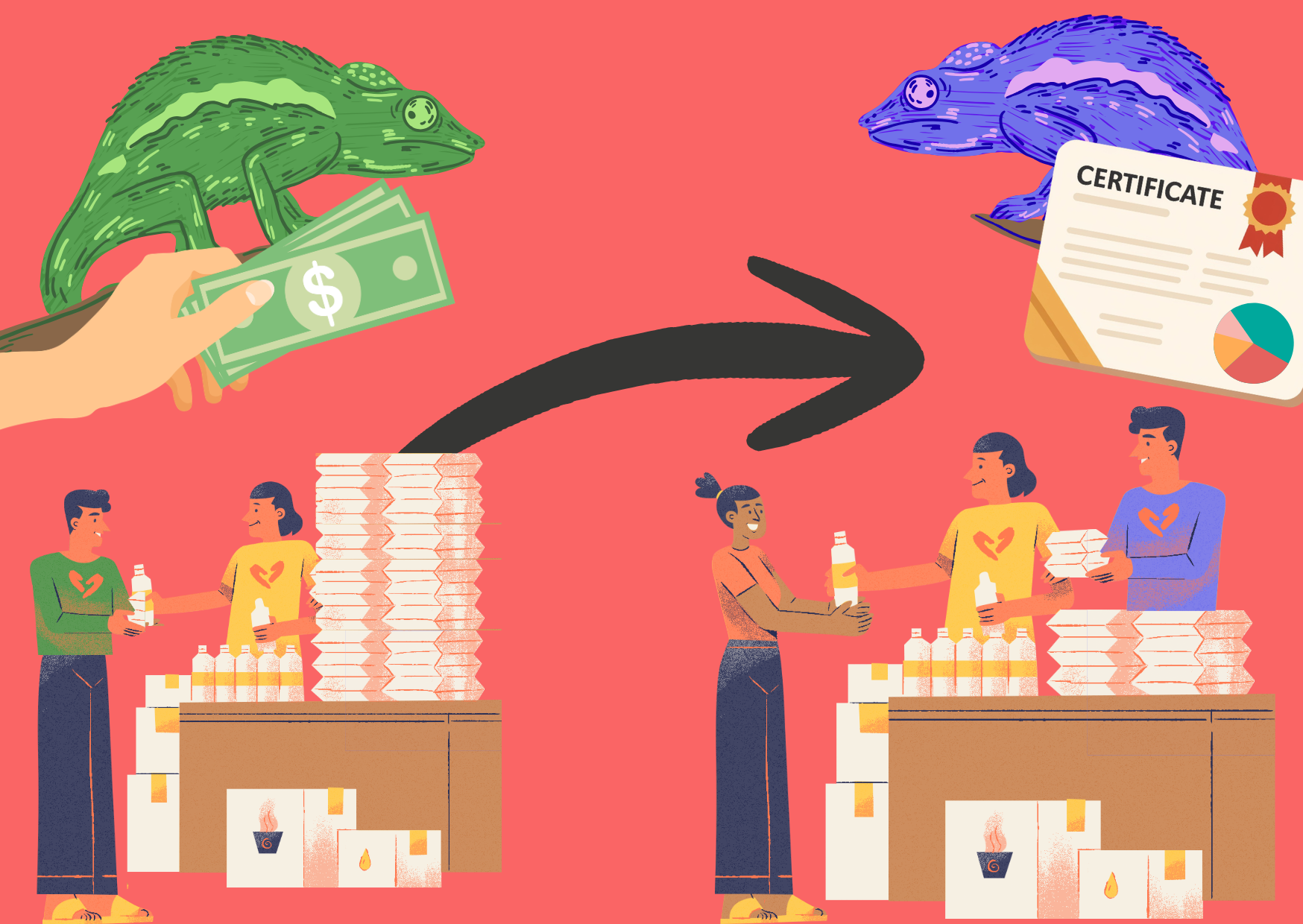
Legally speaking, a convertible loan is a chameleon. It begins its existence as classic debt—a liability of the company toward the lender. Unlike a bank loan, however, the goal is usually not the repayment of the principal amount plus interest. Instead, the investor receives the contractual right (and often the obligation) to convert the loan amount into equity—typically shares—at a later date.
This hybrid form makes the CLA the "fast track" of financing. While a classic equity round requires public notarization, amendments to the articles of association, and filings with the commercial register, a simple written agreement is sufficient for a convertible loan. This not only saves significant notary and advisory costs but also shortens the process from weeks to a few days.
2. Strategic Advantages: Why Invest Today and Value Tomorrow?
The greatest advantage of the CLA lies in avoiding an immediate company valuation. Since the loan is only converted during a later financing round (the so-called "Qualified Equity Round"), the valuation of that future round serves as the basis.
- Deferred Valuation: Founders and investors do not have to argue over hypothetical values; they rely on the market mechanism of the next professional financing round.
- Agility: Startups can raise capital "on the fly" to reach important milestones, which in turn justify a higher valuation in the main round.
- Protection against "Down Rounds": In volatile markets, the CLA offers flexibility because no fixed valuation is cemented in the articles of association, which would lead to a painful "down round" in the event of a slight market correction.
3. The Mechanics of Conversion: Discount, Cap, and the Price of the Early Hour
A convertible loan is not an act of charity for investors. Since they provide capital at a time when the risk of total loss is significantly higher than in later rounds, they require corresponding compensation. In a CLA, this is regulated via three central levers: the discount, the valuation cap, and the interest rate.
3.1. The Discount – Rewarding the Risk
The discount is the most direct way to reward the investor for their early trust. It is defined as a percentage (usually between 10% and 25%). If the loan converts in a later financing round, the CLA investor does not receive the shares at the price paid by the new investors, but rather at a price reduced by this discount. If new shares are issued for CHF 10.00, the convertible loan lender pays only CHF 8.00 per share at a 20% discount. Consequently, they receive more shares for the same invested amount.
3.2. The Valuation Cap – The Investor’s Insurance
While the discount secures the relative advantage, the valuation cap protects the investor from the startup’s explosive success prior to conversion. Suppose a startup develops rapidly between the receipt of the convertible loan and the next financing round. Without a cap, the investor would receive only a tiny fraction of the company despite their early entry at an extremely high valuation. The cap defines the maximum valuation at which the loan is converted—regardless of how high the valuation in the new round actually is.
Practical Tip: It is usually agreed that whichever mechanism (discount or cap) results in the lower share price for the investor will be applied.
3.3. The Interest Rate – More Than Just Compound Interest
Although conversion is the goal, the CLA remains a loan until then and is partially interest-bearing. In Swiss startup practice, however, this interest is almost never paid out in cash. Instead, it follows the PIK (Payment-in-Kind) principle, where it is added to the loan principal and converted on the day of the event.
This increases the number of shares the investor receives without burdening the startup's liquidity during the term. From a legal perspective, it should be examined—especially for loans from existing shareholders or related parties—whether a market-standard minimum interest rate (according to SFTA circulars) is advisable to avoid tax pitfalls.
4. Trigger Events: When the Moment of Truth Arrives
To ensure that investors actually receive company shares, clear triggers for conversion are required:
- Qualified Financing Round: Reaching a defined capital amount from new investors (e.g., CHF 500,000). Conversion is usually mandatory here.
- Non-Qualified Round: Smaller rounds where conversion is often at the investor's discretion.
- Maturity Date: An "expiration date" (usually 18 to 24 months). If no round has been carried out by then, a decision must be made: repayment, extension, or conversion at a predefined valuation (the so-called "floor").
5. Information Rights and Swiss Pitfalls: What Is Often Overlooked
In addition to the financial mechanics, a CLA regulates the rules of the game between founders and investors during the loan term. Since the investor is not yet legally a shareholder, they lack the statutory participation rights of a partner. This gap is closed contractually.
5.1. Information and Consent Rights
Investors require regular updates on the financial situation (reporting) as well as access to the books. More critical are the veto rights (consent requirements): For far-reaching decisions—such as the sale of the company, the assumption of further large debts, or a change in the business model—convertible loan lenders often secure a veto. Here, founders must maintain the balance between investor protection and entrepreneurial freedom.
5.2. The Swiss Focus: Taxes and Accounting Law
In Switzerland specifically, there are three regulatory cliffs that must be navigated when structuring a CLA:
- The 10/20 Rule (Withholding Tax): If a startup takes out more than 10 loans from non-banks on identical terms, the Swiss Federal Tax Administration (SFTA) classifies the construct as a bond for tax purposes. The consequence? A withholding tax of 35% would have to be paid on the interest. This is an administrative and financial nightmare for young companies.
- Subordination (Art. 725b CO): Since convertible loans are recorded as debt, they increase the liabilities side of the balance sheet. For startups in the loss zone, this quickly leads to mathematical over-indebtedness. To avoid a trip to the bankruptcy judge, the CLA must include a subordination agreement (Rangrücktrittserklärung). The investor agrees to step behind all other creditors in the event of liquidation.
- Conditional Capital: To ensure that shares can actually be issued on the day of conversion, the company should ideally already have conditional capital (Art. 653 et seq. CO) in its articles of association. This guarantees a smooth conversion without having to convene a general meeting at the last minute.
6. The Risk of Dilution
An often underestimated risk is "cumulative dilution." If several CLA rounds with different caps and discounts are layered on top of each other, founders often lose significantly more shares in the first major financing round than they had originally calculated. A clean cap table simulation before signing is therefore essential.
7. Conclusion: Agility with Foresight
The convertible loan is the ideal instrument to bring "speed" into financing without getting lost in complex valuation discussions. However, the simplicity of the document must not obscure the long-term consequences. Precise coordination of the cap, discount, and tax framework is crucial to ensure the bridge does not become a dead end.
